
At sixteen, Lena asked the question her adoptive mother had always feared: “Did you ever wish I’d been someone else’s child?” The answer began with a box neither of them had opened.
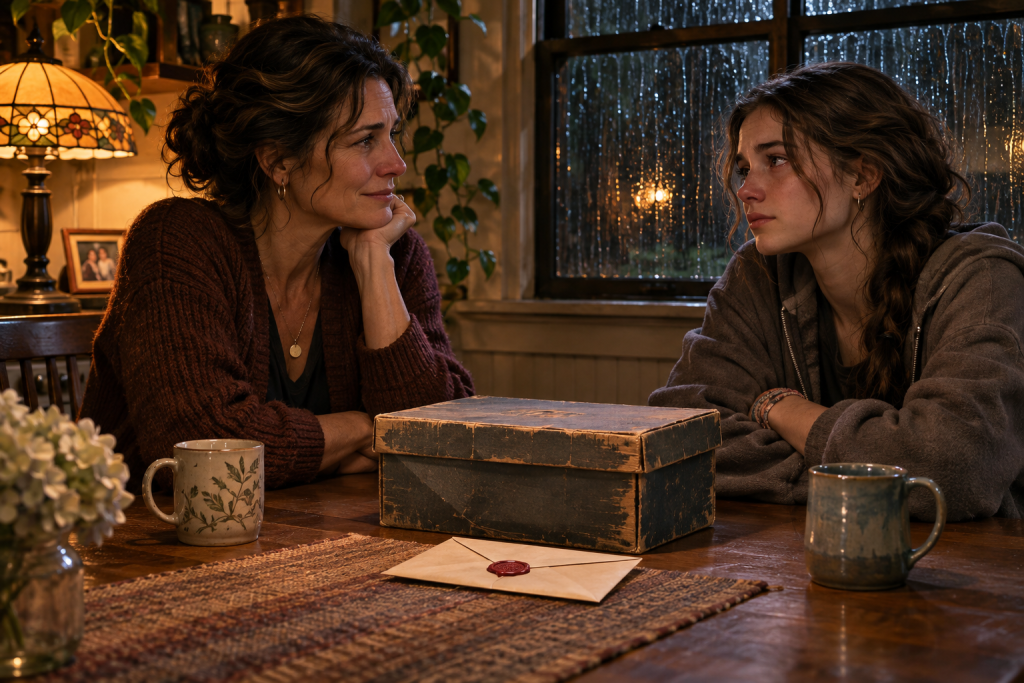
The question at the kitchen table
Lena asked on a Tuesday night, while rain tapped the windows and the pasta water boiled over.
“Did you ever wish I’d been someone else’s child?”
Her mother, Ruth, turned off the stove. She had spent twelve years learning not to answer Lena’s hardest questions too quickly. She knew that an easy reassurance could sound like a door closing.
“No,” Ruth said. “But I have wondered whether I’ve always known how to be the mother you needed.”
Lena stared at the table. Her birth mother, Tessa, had recently sent a letter through the adoption agency. It was the first time she had written since Lena was a baby. She said she hoped Lena was happy. She included a photograph of herself holding a knitted yellow blanket.
Lena had read the letter dozens of times. The photo made her want to meet Tessa. It also made her feel disloyal for wanting it.
“I want to know her,” she said. “And I don’t want you to think that means you weren’t enough.”
Ruth sat beside her. “I don’t think that. I’m scared you’ll feel you have to protect me from the truth.”
The box in the closet
Ruth went to the hall closet and brought back a shoebox she had carried through three moves. She had planned to give it to Lena when she turned eighteen, along with a fuller explanation of the adoption. But Lena was asking now, and the box belonged to her.
Inside were the first photographs Ruth and her partner, Jo, had received: a newborn with one fist curled beside her face; a hospital bracelet; a short note from Tessa. The note said she had chosen adoption because she couldn’t safely raise a baby then. It didn’t ask for forgiveness. It asked that Lena be told she was wanted, even when Tessa couldn’t be the one to care for her.
There was also a letter Ruth had written but never sent. She had drafted it during the first year, when Lena’s sleep was difficult and Ruth felt overwhelmed by how much she loved a child she had not carried.
“I wrote that I hoped you’d always know you didn’t owe me gratitude,” Ruth said. “Then I worried it might make you feel responsible for my feelings. So I kept it.”
Lena picked up the folded pages. “You were scared too?”
“Every day,” Ruth said. “Love didn’t make me instantly wise.”
A name, not a replacement
They agreed to reply to Tessa through the agency. Lena wrote the questions herself: What music did she like? Did she have siblings? Why had she chosen the yellow blanket? She also asked whether Tessa would be comfortable meeting someday.
Ruth helped her address the envelope, then stopped before sealing it.
“You don’t have to show me what you write,” she said.
“I want you to read it,” Lena replied. “I just don’t want you to answer for me.”
Ruth nodded. The distinction was small and enormous.
RELATED: The School Trip His Ex-Wife Couldn’t Afford to Join Became Their Daughter’s Best Day
The meeting she chose
Tessa replied three weeks later. She said she would meet Lena, but she didn’t want to make promises about the future. She was working through a difficult period and wanted to be honest about what she could offer.
They met in a public garden with Ruth nearby, as Lena requested. Tessa brought the yellow blanket, carefully washed and folded. She didn’t reach for Lena. She asked whether she could sit beside her.
Lena asked why Tessa had picked yellow.
“It was the brightest color I could find,” Tessa said. “I wanted you to have something cheerful. I was afraid I couldn’t give you enough else.”
Lena held the blanket on her knees. She had imagined a meeting that would settle something. Instead, it gave her a person: nervous, thoughtful, and not magically able to fill the years between them.
On the ride home, she leaned her head against Ruth’s shoulder.
“You can miss someone you’ve just met,” Ruth said.
Lena nodded. “And still come home.”
The note she kept
A month later, Lena asked Ruth to help her plant the yellow blanket’s tiny embroidered flower pattern in a sketchbook. It wasn’t a real flower, but she wanted to draw it before she forgot the details.
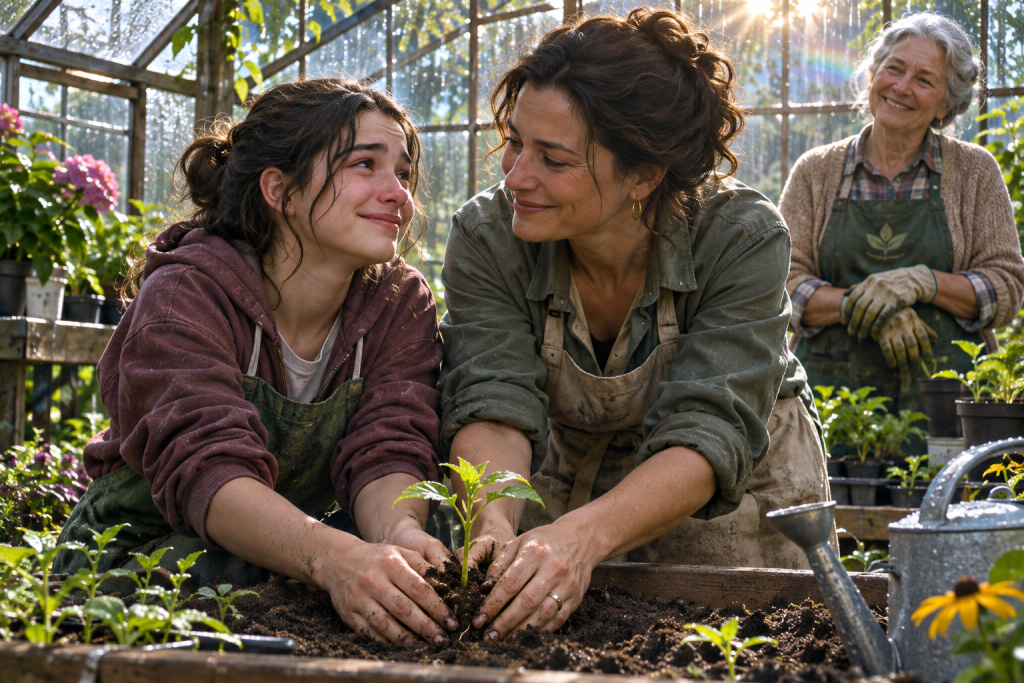
They spent a Saturday morning at the community greenhouse, where Ruth had volunteered for years. Lena chose a seedling with leaves no bigger than her thumbnail. She and Ruth pressed soil around its roots.
“I’m not ready to call Tessa Mom,” Lena said.
“You don’t have to.”
“I’m also not sure what I call you when I’m angry.”
Ruth smiled sadly. “You can call me Ruth when you’re angry. You can call me Mom when you want.”
Lena wiped dirt from her fingers. “Mom, can we come back next week?”
They did. The seedling survived, then grew slowly in the window at home. Lena kept Tessa’s letter in the shoebox and Ruth’s unsent one in her desk. Neither letter competed with the other. They told different parts of the story of how Lena had come to be loved.
RELATED: My Mother-in-Law Kept Correcting My Pie. Then I Learned Why She Was Afraid to Taste It