
After years of careful co-parenting, Nia and Peter thought they had learned how to keep their old hurt separate from their daughter’s life. A medical emergency revealed what their family still needed from both of them.
The call after midnight
Nia’s phone rang at 12:18 a.m. Peter’s name appeared on the screen.
For a moment, she thought he had called by mistake. They had been divorced for eleven years. Their son, Eli, was twenty-four and lived on his own. Nia and Peter could share a calendar and a polite conversation, but they had not spoken after midnight since the night they decided to separate.
“Eli’s been in an accident,” Peter said. His voice sounded thin. “He’s awake. They’re taking him in for surgery.”
Nia was out the door before she found her shoes.
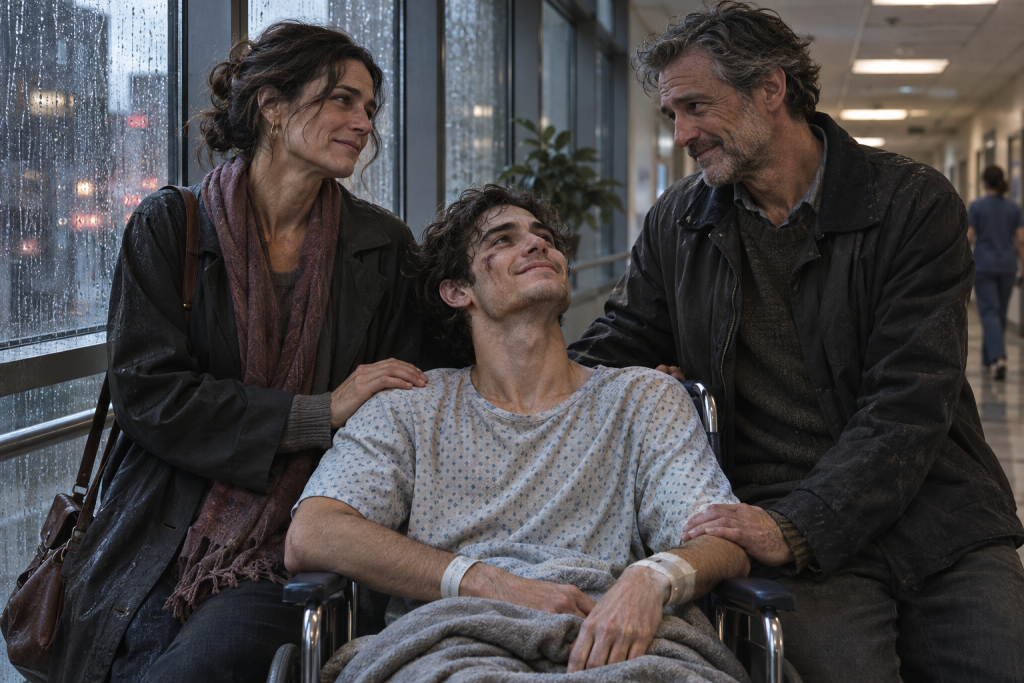
At the hospital, Peter stood near the elevators with Eli’s jacket over one arm. He had driven him to a late shift and was waiting in the car park when the accident happened. Eli had a broken leg and a head injury. The doctors were optimistic, but they needed to operate.
Nia wanted to ask why Peter hadn’t called sooner. She wanted to ask whether Eli had been alone. Instead, she put her hand on Peter’s shoulder. His whole body seemed to give way beneath it.
A request neither expected
The surgeon explained the procedure and the recovery. Eli would likely need months of rehabilitation. His apartment had stairs, and his job at a bike shop offered no paid medical leave.
“We’ll work it out,” Nia said automatically.
Peter looked at her. “I can take him. He can stay with me.”
His house had a first-floor room, but the bathroom was narrow, and the front steps were steep. Nia’s apartment was accessible, but her work required long hours. They began listing options, each sentence carrying old arguments they had once learned to avoid.
Then Eli woke enough to see them both.
“Don’t fight over where I go,” he whispered.
“We’re not,” Nia said.
He closed his eyes. “Good. I want to stay at Dad’s.”
Peter blinked. Nia felt the words land harder than they should have. She had spent years being the parent who remembered appointments, made sure the school forms were signed, and stayed up through fevers. Now her son had chosen Peter’s house.
The ramp
The next morning, the hospital’s occupational therapist confirmed that Peter’s entry steps would make discharge unsafe. A temporary ramp could be installed, but the contractor couldn’t come for ten days.
Peter began calling charities and local services. Nia searched for accessible rentals. Neither found an immediate answer.
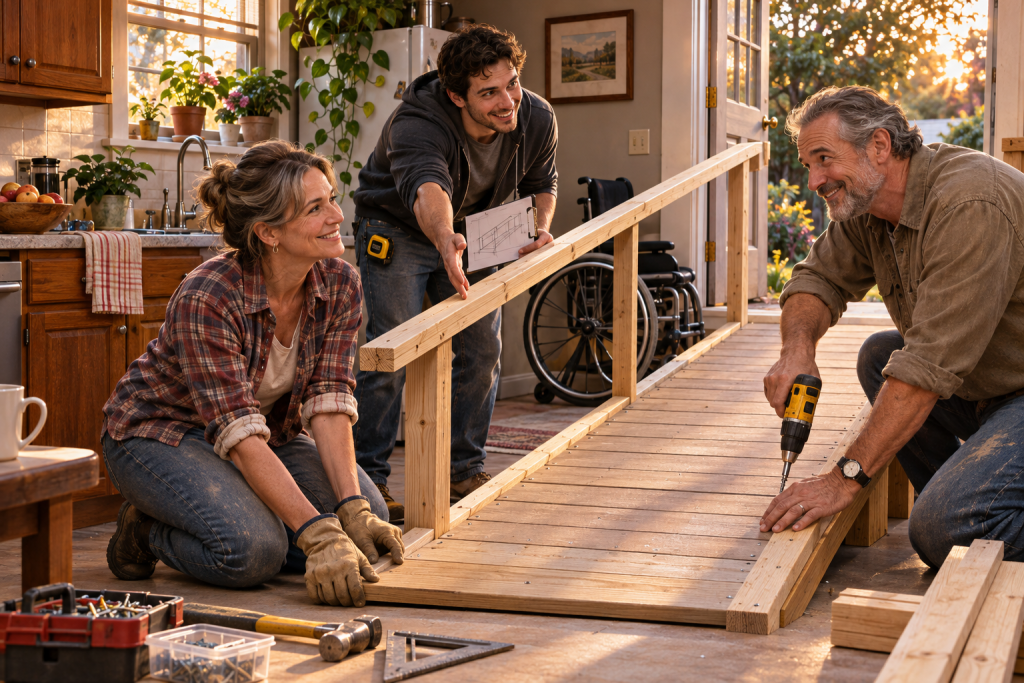
Then Ruth, a neighbor Nia barely knew, heard the situation from the building manager. She was a retired carpenter who had spent years repairing sets for a community theater. She offered to help build a temporary ramp with the theater’s volunteer crew.
“I don’t want anyone doing this because they feel sorry for us,” Peter said.
Ruth answered, “I’m doing it because I have tools and a free Saturday. You can decide whether to accept the help.”
Nia watched Peter struggle with the offer. He had always believed needing help meant losing control. She recognized the same fear in herself.
RELATED: The Box Her Birth Mother Left Wasn’t an Answer—Until Her Adoptive Mother Opened It
The name on the consent form
That evening, Eli asked Nia to bring his backpack from the car. Inside was a folded paper from his employer: a leave request, unsigned. He had been saving for a certification course and worried he would lose his place if he couldn’t return quickly.
Nia called the shop manager. Peter called the training program. They spoke separately, then put the calls on speaker so Eli could hear the options. The manager agreed to hold Eli’s job for six weeks. The course offered a later start date.
Eli listened, then said, “I thought I had to decide which of you was going to be the responsible one.”
Peter looked down. Nia reached for her son’s hand.
“You don’t have to choose,” she said.
The next morning, the hospital asked who would sign the discharge plan. Peter was listed as Eli’s primary caregiver. Nia was listed as the emergency contact. It was sensible, but Eli asked the nurse to write both names under “people to call.”
“They’re both my parents,” he said. “Even when they’re not a couple.”
A different kind of family
The ramp was ready by the time Eli came home. Ruth’s volunteer crew had built it sturdy and plain, with a handrail at each side. Peter tried to pay for the lumber. Ruth accepted only the cost of materials.
Nia brought groceries and stayed for the first night. Peter made tea. They did not talk about their marriage, or about who had been right when it ended. They talked about Eli’s medication schedule and whether the ramp needed another coat of sealant.
At dawn, Nia found Peter asleep in a chair beside Eli’s bed. She placed a blanket over him. He woke and looked embarrassed.
“Thanks,” he said.
She almost said, “You would’ve done the same for me.” Instead, she said, “We both would.”
Months later, Eli returned to the bike shop part-time. He still needed a cane on bad days. His parents came to his first day back, arriving separately but standing together outside the shop window. Eli spotted them and grinned.
He later framed a photograph of the three of them on the ramp. It wasn’t a picture of a family restored to what it had been. It was a record of what they had chosen to build: a way forward wide enough for everyone.
RELATED: The Waitress Kept Bringing My Grandmother Tea. Then She Started Humming